Print this page Share this page
  • Choosing Sleeping Bags


Spending around a third of your day asleep means you want to sleep in warmth and comfort (at least for the sane and non military amongst us). Choosing the right sleeping bag is essential to your comfort and in extreme situations your survival. For a large range of sleeping bags for all conditions visit our sleeping bags department in Simply Hike

FeaturesFeatures Of A Sleeping Bag


Hood
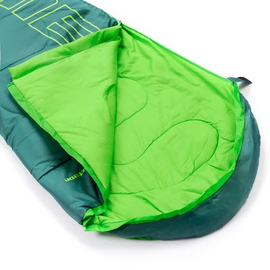
Most sleeping bags have a hood that can be drawn snugly around your head in cooler weather. Up to half of your body's heat can be lost through your head, so a good fitting hood can greatly improve the efficiency of your sleeping bag. The hood should have slightly more fill material than the rest of the bag.

Draft Collar
The draft collar is located at the base of the hood. This insulated tube of material is designed to prevent heat loss from around your neck and shoulders whilst sleeping. Rectangular shaped summer bags may not have draft collars, but they are an instrumental part of all winter sleeping bags. The collar should be bulky enough to fill the excess space between your neck and shoulders, but not so bulky you feel claustrophobic.

Zip
Zips should have teeth big enough to run smoothly, without catching on fabric. Right handed people generally prefer left-hand opening bags and vice versa. If you are planning to zip two bags together, ensure one has a right zip and one has a left zip.

Zip flap or Baffle
Most sleeping bags have an insulated flap or baffle that runs parallel to the zipper in order to block heat loss. The flap should be sewn only to the lining material, since sewing through the bag creates holes that allow air leaks. Cold weather bags may have two thickly filled draft flaps. If there is a single flap it should be sewn to the top zipper so it hangs down when you sleep.

Pockets
Some bags come equipped with accessory pockets. Ideal if you need to keep small soft items warm whilst you sleep.

Bag Shape


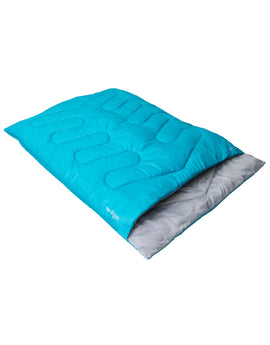
Rectangular Bags
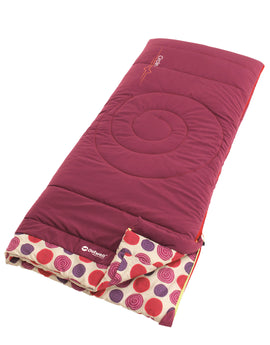
These sleeping bags are more suitable for warmer weather site camping rather than backpacking or expedition use. Most bags in this category have nylon fillings and shell materials, this makes them bulky and heavy for the insulation provided, but they do offer a more room if you need to allow your legs more space when sleeping.

Click to see our range of Square Bags.

Mummy shaped Sleeping Bags
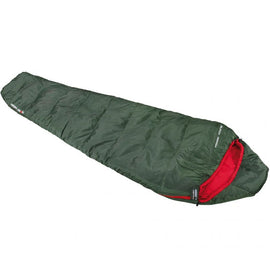
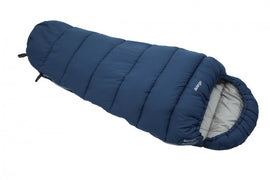
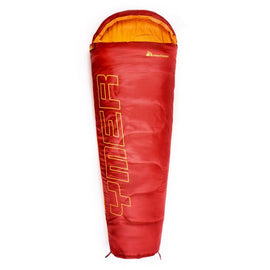
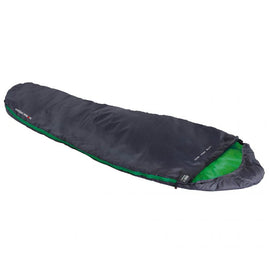
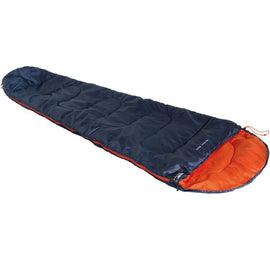
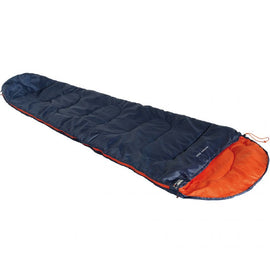
These are the most efficient at keeping your body warm, but they have a fairly restricting shape that prevents huge amounts of movement while you sleep and are not recommended the claustrophobic! The use of a hood plus baffles along the zip and around the neck area greatly increases the heat retention and gives more flexibility for ventilation options to regulator the bag temperature.

Click to see our range of Mummy Bags.

Bag Shape

Insulation

Sleeping bags are filled with either natural goose or duck down or with synthetic fibres.

LoftNatural fill

Down is the best natural insulator known. It is light and compresses easily. It can pack small and its loft an be fluffed back with just a couple quick shakes. Down costs more than synthetic fill, and if it becomes wet it loses about 80% of its insulating abilities and takes a long time to dry. Keeping your down bag dry is essential. A well-cared-for down sleeping bag will keep you warm and comfortable through several years of outdoor adventures.

Click to see our range of Natural Bags.

Synthetic fill

is made from small fibres that are treated with silicone to help enhance their loft (Loft is a key factor in determining a bag's warmth. It refers to the thickness or puffiness of a bag. If two bags have the same fill type, features, and shape, the one with the higher loft will be warmer). The fibres also have chambers in them to help trap air. Synthetic-filled sleeping bags cost less and are great for people who are allergic to down. They also continue to insulate when wet and dry quickly. However, synthetic bags weigh more and have a shorter life span than down bags. They often take up more space in your pack as well.

Click to see our range of Synthetic Bags.

Construction

Sewn ThroughSewn-through is used in lightweight or warm-weather synthetic or down bags, it is inexpensive to construct, but can have cold spots at quilt lines.

Offset QuiltOffset Quil
t Is used for synthetic bags only. It has no cold spots at quilt lines and is less expensive than shingled construction.


Shingles Shingles
Are used for synthetic bags only. It is the most warmth-to-weight efficient construction, but is more expensive than offset quilt.

BafflesBaffles
Are used in down bags only. They feature mesh partitions at quilt lines to prevent cold spots and keep down from migrating through the bag. Expensive, but very warm.

Sleeping Bag Comfort Rating

When choosing a sleeping bag you will usually find that it has a 'comfort rating.' This comfort rating is a standard way to measure the comfort of a sleeping bag and is used by suppliers. Sometimes the suppliers idea of comfort to ours can vary. There are a couple things to bear in mind when choosing a new sleeping bag.

Metabolism

Some people sleep hot and others, cold. If you have a fast metabolism then you will need a cooler sleeping bag than those whose metabolism drops quite a bit during the night, they will need a warmer sleeping bag.

House Temperature

If you have a relatively warm house or always have your heating set, to say 25 degrees, then you are going to be used to being much warmer at night than those who live in a much cooler house. So if you are used to the warmth then we would suggest that you opt for a sleeping bag which has a higher temperature rating so that you are not too cold.

Upper and Lower Comfort Rating

The upper comfort rating is the temperature at which the sleeping bag will feel too hot to sleep. The lower comfort rating is the temperature at which it is just possible to sleep when fully clothed.

These ratings also assume that you are in still air, you are dry and that you are well insulated from the ground. Any of these factors will have a big impact on the performance of your sleeping bag and your night's sleep.

Seasons


Some sleeping bags give you guidelines to what season they are ideally suited for. Here are the seasons explained:

Season 1 Season 1 is a bag suitable for summer use only; of temperatures 7 degrees and above.

Season 2 Season 2 is a bag suitable for temperatures of 0 degrees. We would suggest that if you are camping in the UK over the summer then a bag which has a season 2 rating would be quite comfortable for you.

Season 3 A season 3 bag is good for using in the autumn when the ground temperature is around 0 to -5 degrees. You wouldn't really want to use a season 3 bag in conditions below -5 degrees.

Click to see our range of 3 seasons sleeping bags.

Season 4 A season 4 sleeping bag is designed for colder temperatures, around -10 degrees.

Click to see our range of 4 seasons sleeping bags.

Season 5 A season 5 bag is designed for expedition users to -15 degrees or more. This rating is made under the assumption that you are fully clothed in thermal clothing in snow and arctic conditions.

A season 5 bag would make a good UK winter bag if you are not fully clothed.


Overview

So if you are looking to buy a new sleeping bag but don't have a lot of money we would advise you getting a 3 season bag. It is the most flexible in the way that in the summer you can sleep in your underwear and in the cooler weather you can add layers of clothing.

Obviously if you just tend to go camping in one season then pick the one suitable for the temperature where you will be staying. Don't forget to take into account the other factors like the temperature of your house and how quick your metabolism is when making your decision.

You will tend to find that the higher the season, like a season 5 bag, the bulkier it will be.

For sleeping bags visit our sleeping bag department.
Shop