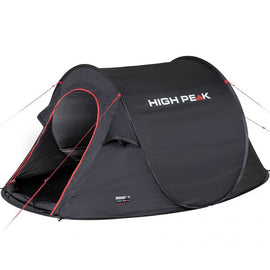
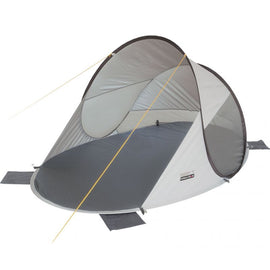
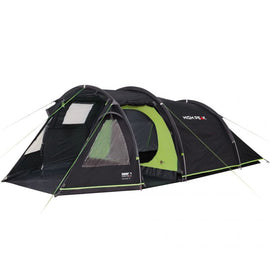
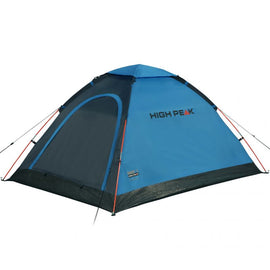
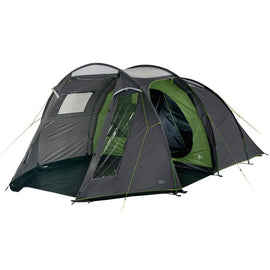
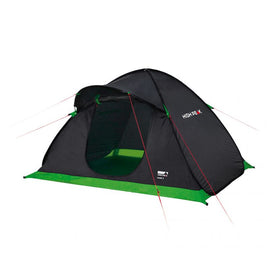
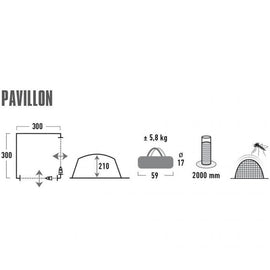
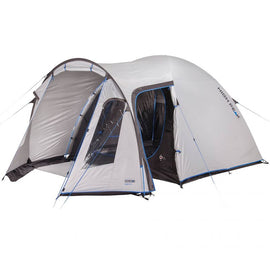
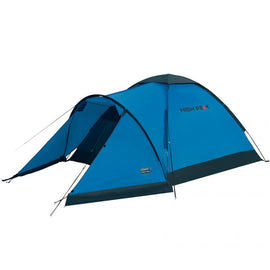
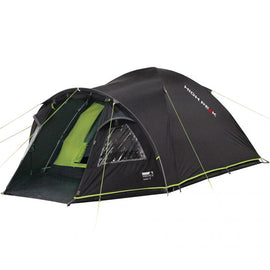
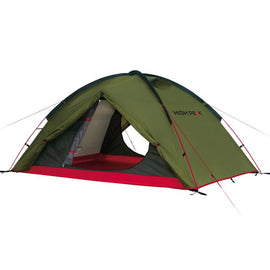
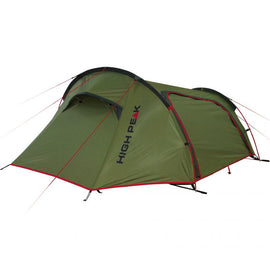
Is the strongest type of tent. It uses intersecting poles to produce a strong self-supporting structure with a large internal volume. The interlocking poles easily handle a large weight of snow and since there is very little unsupported fabric, the tent has minimum 'sail area' to be buffeted by the wind.
Ridge or A Frame:
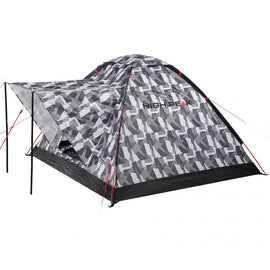
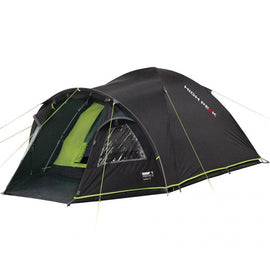
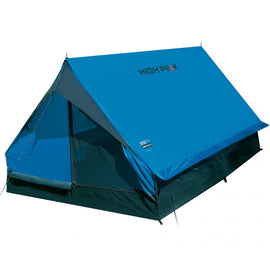
Any tent which has a horizontal pole going across the top. The upright poles that support it may be a single upright pole, or two sloping poles (also known as an 'A' frame). More commonly, the upright at the back is lower than at the entrance making access easier, and yet allowing for movement. Ideal for scouting activities.
Dome:
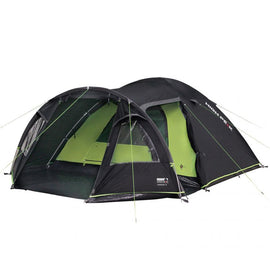
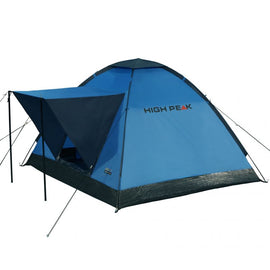
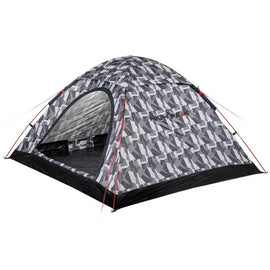
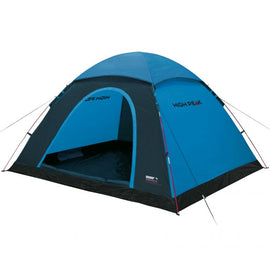
Dome tents are aerodynamic and stable. They are designed to shed wind and all types of precipitation effectively. One of the most popular tent designs on the market.
Hoop or Tunnel:
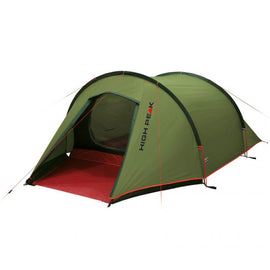
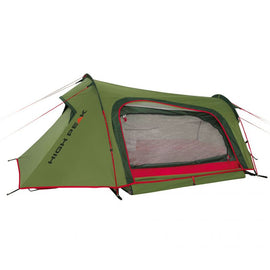
Hoop tents available in two- and three-hoop varieties. Three-hoop models are especially popular with long-distance hikers. They are lightweight. Their low profile offers weather-resistance as well as a spacious interior - no need for a rain fly.
Season Rating
Seasons are used as a guide to determine how suitable your tent will be for the chosen conditions, all tents can be sorted into 4 groups depending on the weather they can withstand. Before purchasing a tent decide what the worst possible weather you will encounter. Its always better to get a tougher tent which will keep you comfortable rather than getting a lesser tent which will be a wreck by morning.
1 Season - suits family camp sites and festivals, for use in warm, relatively calm conditions. Generally speaking they are made using lightweight materials with high ventilation to reduce condensation. Ideal for short showers but will not withstand consistent rain.
2 Seasons - exposed locations in summer, late spring and early autumn, slightly more robust than 1 season tents, are designed to handle prolonged rain. They are generally speaking slightly heavier.
3 Seasons - suits general backpacking, canoeing/kayaking and cycling trips. Ideal for Britain and easily the most popular. This rating gives confidence in autumn conditions of prolonged rain and will insulate occupants in cold weather conditions. The true jack of all trades.
4 Seasons - are more suited to mountaineering. Featuring a minimum of four poles and plenty of guy attachment points and tough construction you can go anywhere in any weather in confidence.
Waterproof Rating
The material used to construct the outer material of your tent is measured in millimetres of hydrostatic head, usually shown as 3000mm HH This is used to denote the amount of pressure of water that is Required in order to penetrate the fabric. During a British Spring, Summer, and Autumn the hydrostatic head of a tent should certainly be no less than 1000mm. Any less and water seeping in during a storm is very likely. Bear in mind also that wind-driven rain requires a higher hydrostatic head. A hydrostatic head of at least 2000mm or more is going to be suitable for most European rain conditions in all seasons.
The most common complaint of any tent is that it leaks. However, this is rarely the case, usually the leak is actually condensation within the tent from the occupants breathing where the ventilation has been blocked leaving no escape for the exhaled moisture. More expensive tents usually offer better ventilation (more vents, larger mesh panels), which helps reduce condensation inside a tent. Higher-priced tents may also offer features like a second door or a gear loft for storing personal items. Look for breathable side walls and roofs to minimize condensation. Mesh windows, doors and panels allow air in, and keep insects out.
The traditional solution to the waterproofing versus condensation problem is to provide two layers, an outer waterproof fly sheet and a lightweight inner tent, which breathes and provides a dry area.
Materials
Most flysheets and groundsheets are made from a lightweight nylon fabric or, alternatively, a more durable lightweight polyester. For groundsheets, a slightly heavier fabric is used, since increased abrasion resistance is Required. Ripstop nylon is reinforced with a fibrous mesh to prevent tearing.
Both flysheets and groundsheets are coated to make them completely waterproof. A variety of coatings are used. Polyurethane (PU) is probably the most common. Silicone elastomer, as used by some manufacturers, this enables even lighter weight nylon to be used without sacrificing any of its strength. All these coatings are non breathable. Thus condensation may form on the inside of the flysheet. However, this can be Reduced by good ventilation. Groundsheet protectors (footprints) are also available and help to protect the tent's built in groundsheet from getting ripped or dirty.
Polycotton
Its extremely breathable, making it ideal for warm climates and summer camping, this makes for a more comfortable camping experience keeping the humidity down and keeping you cool. Being breathable also makes it quick to dry, on a windy day the tent will become dry in a matter of minutes.
Slightly thicker than polyester, its a more durable material, although this does add a small amount of extra weight. Polycotton tents are approximately 5-10% heavier than their Polyester equivalents. However this is a small price to pay for the superior material in our opinion.
Sleep Rating
Generally the per-person capacity ratings manufacturers supply are a little optimistic. Most two-person tents are a bit snug for two people. If one of the two people likes to spread out at night, consider a 2-to-3-person tent or a 3-person model and so on.
TOP TIP: A good rule of thumb is when buying a tent - minus one person from the manufacturers recommendations. So, a two person tent would be comfortable for one with kit, a three person tent, would be comfortable for two with kit and so on.
Weight
Weight is a consideration if you will be carrying your tent as opposed to transporting it by vehicle. Obviously a much lighter tent will be Required if you have to carry your tent.
Porches
Porches allow an area to store equipment and also enter and exit your tent. Most tents will only have one porch but more specialist tents may have two to allow easy entrance and exits in poor weather so you always enter or leave the tent from lee side to avoid your tent blowing away.
Entrances
Most tents have one entrance which also doubles as a storage area at night, however you should always ensure your exit is kept clear. A second entrance means that one of the two entrances will be sheltered from the weather allowing less water into the tent in poor conditions.
One feature that is essential in a tent for use in some areas is a mosquito netting door. This allows you to sleep with the entrance open for ventilation and this fine mesh screen will keep the mosquitos out.
Colour
Colour can, believe it or not, be not only an aesthetic choice. For use in areas where search and rescue may need to locate you (i.e. mountaineering) a brightly coloured tent is an advantage, but for anywhere else it is a possible eyesore.
The colour of the tent will affect the quality of the light inside, with green, blue or grey filtering the sunlight to produce a soft light effect on the inside which is very restful on the eye. However , in dull conditions the effect can be slightly gloomy. For use in poor weather conditions a bright yellow or orange material will produce a bright, cheery environment inside.
Poles
The more you pay for your tent the lighter and stronger your poles will be. Most poles are now linked via elastic shock cords so you do not have to work out which section fits to which, making pitching much quicker. Aluminium poles are lighter and more durable than fibreglass poles.
Pitching
Before venturing outside for the first time with your tent, make sure you pitch it either inside or in your garden. This will allow you to become familiar with the procedure in your own time. Take time to read the instruction manual that came with your tent making sure you have all the parts.
Some basic advice should ensure you get a good nights sleep in your tent:
Never pitch your tent next to a stream, if the water level rises so do you!
If you have to pitch on a gradient, always sleep with your head at the highest end
Pitch your tent so one of the entrances is away from the wind
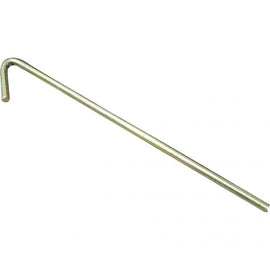
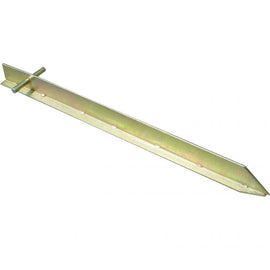
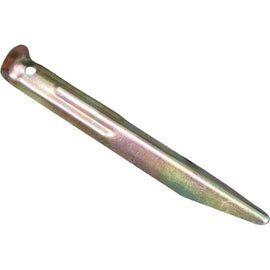
Have some heavy but smooth items to and to weight down your tent whilst you get your pegs in.
Always fix the windward side of the tent first
If you expect a lot of rainfall dig a drainage moat around your tent for excess water to collect in and then flow away
Essential Extras
A window - is invaluable for extended periods inside the tent when natural light is a real morale boosting factor: you can check the weather conditions without leaving your tent, or even your sleeping bag!
Gear Loft - a hanging gear loft allows easy access to smaller, more frequently used items is a bonus and helps prevent the scrambling search for the torch in preparation for that nocturnal call to answer the call of nature!
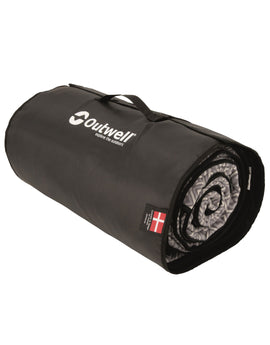
A foot print - is an addition layer to protect the floor of the tent from sharp rocks and extend its lifetime. If you cannot buy a custom made footprint then cut a piece of strong polythene to the shape of your groundsheet, but trim it to 2" inside the outline to prevent water pooling between the footprint and the groundsheet after running off of the fly sheet.
Ceiling Fan - not necessarily essential, however is a really nice thing to have on a hot summers day.
Maintenance
Erect and inspect the tent before use, this allows you to discover any damage or wear before you are in the middle of nowhere and it becomes a real problem. Never shake shock-corded poles to snap them together, this causes rough points to form that can tear the fabric. Try to take off boots before getting into the tent to reduce wear and tear.Clean and dry the tent as thoroughly and as soon as possible after use, preferably on a daily basis when in use. Seal the seams regularly to ensure complete waterproofing, and reproof the flysheet every other year. Always fold shock corded poles from the centre, not one end, as this minimises the tension on the cord.
Fire Warning
A fire in a tent is a terrifying and life threatening situation, so take every possible precaution and only cook under the flysheet as a last resort. Most tents are now fire resistant, however fire resistant does not mean "fire proof".